
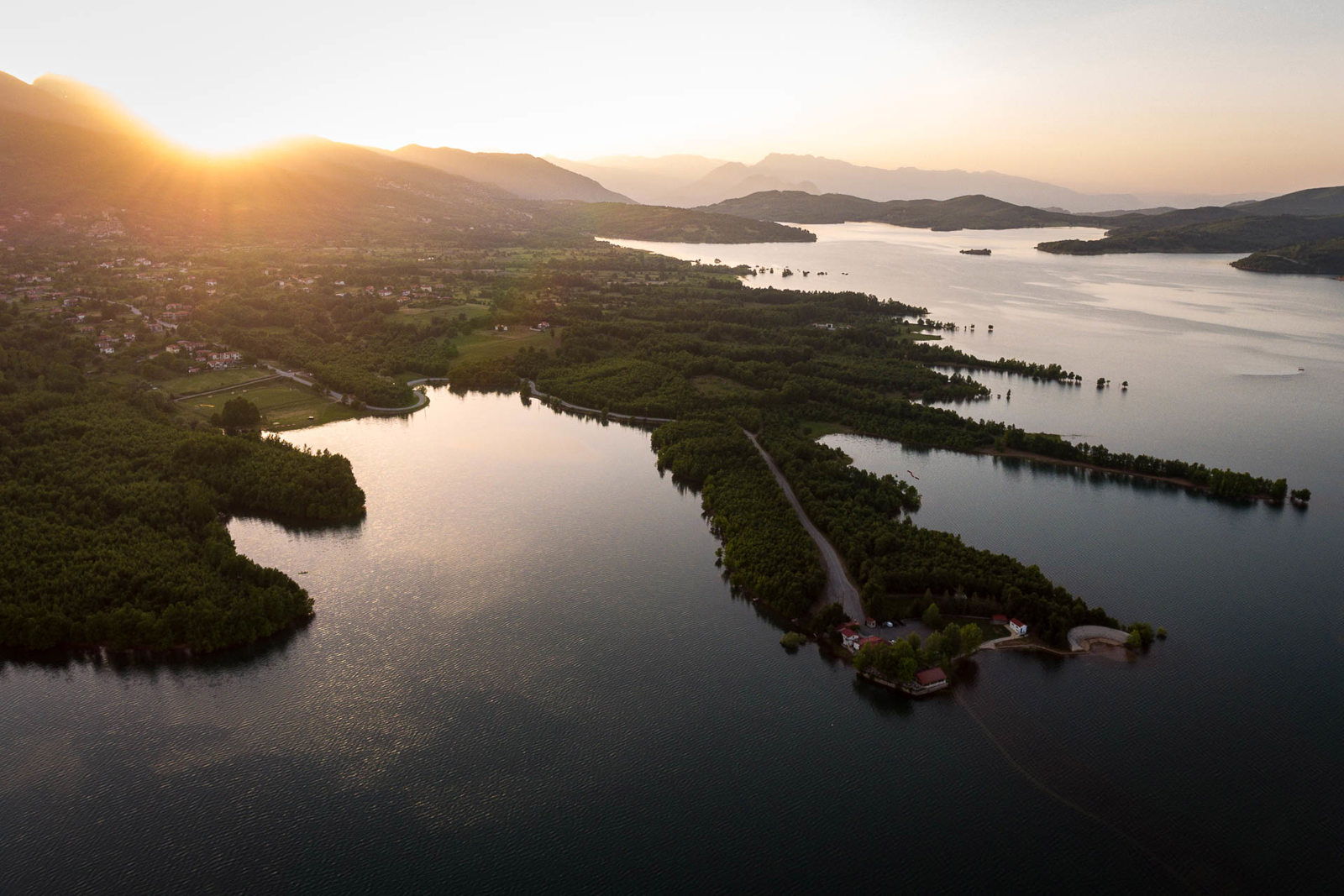
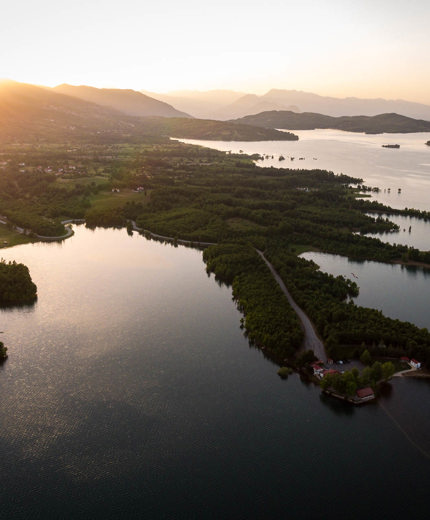
Lake Plastira, often referred to as the "jewel of Thessaly," is one of Greece’s most remarkable infrastructure projects with a fascinating history. Discover five confirmed facts that make it truly unique:

- From Vision to Reality
Lake Plastira is an artificial lake created through the construction of the Tavropos Dam in 1959-1960. The project was envisioned by General Nikolaos Plastiras during the 1920s-1930s with the aim of irrigating the Thessalian Plain and producing hydroelectric energy. Its completion transformed the once barren area into a paradise. -
The "Lake of Records"
Situated at an altitude of 750 meters, it is one of Greece’s highest artificial lakes. Spanning 25 square kilometers with a depth reaching 60 meters, its characteristics combined with the surrounding mountainous terrain create a unique microclimate. -
A Rare Ecosystem
The lake and its surrounding area form a protected ecosystem. It is home to significant bird and fish species, including trout and cormorants. The region is part of the Natura 2000 network, highlighting its environmental importance. -
Multifaceted Utility
The lake serves multiple purposes:- Hydroelectric energy production
- Irrigation of the Thessalian Plain
- Water supply to the city of Karditsa and nearby areas
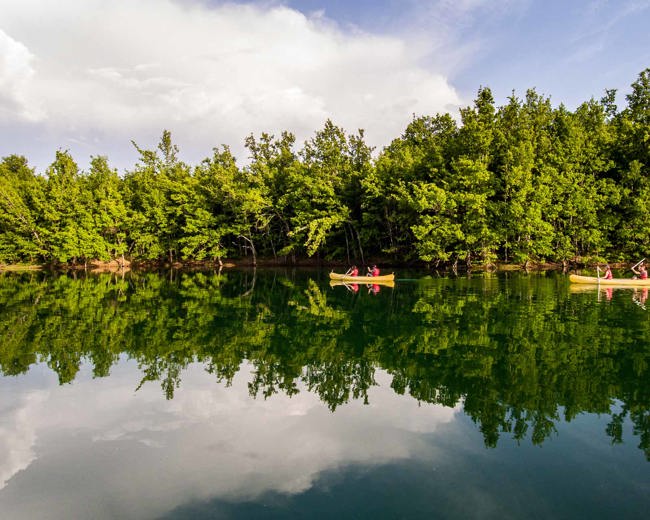
- Tourism development with activities such as canoeing, kayaking, sailing, and fishing
-
An "Alpine" Landscape
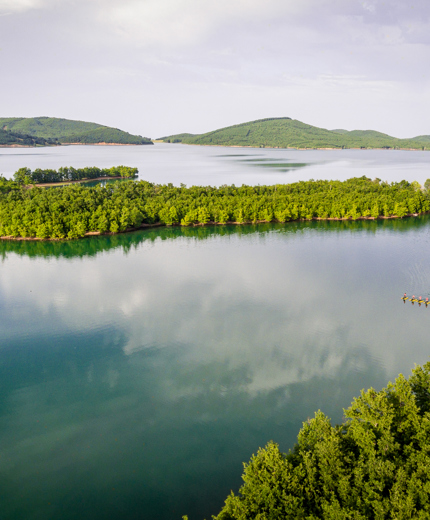
The natural environment around the lake is unparalleled in Greece. Fir trees extending to the shores, steep mountains, and serene waters create a landscape reminiscent of an Alpine lake—earning it the nickname "Switzerland of Greece."
#Tip: Don’t miss visiting the traditional villages around the lake, such as Neochori and Pezoula. Here, you can savor authentic local cuisine and explore the region's rich gastronomic heritage.