Trekking Hellas Logo

3 Days Hike Olympus

3 Days Hike Olympus

Enjoy the mythical mountain!

ACTIVE PERIOD
15 June - October
DIFFICULTY LEVEL
3
DURATION
3 days
3 Days Hike Olympus
Price from €380
PRICE FROM € 380 - DECLARE INTEREST

Overview

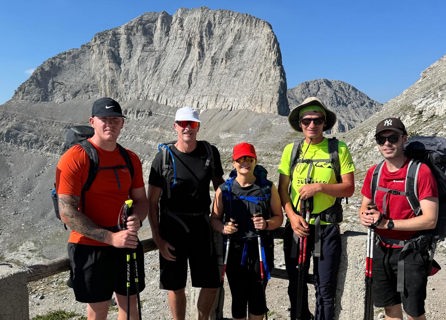
3 Days Hike Olympus is a three-day hiking tour allowing you to enjoy the mythical mountain and reach its peaks at a good pace.

Activities / Schedule

Litochoro & hike to mountain hut Spilios Agapitos (alt. 2,100 meters)

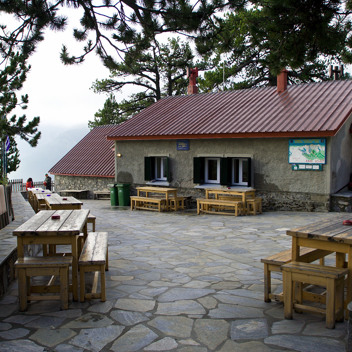
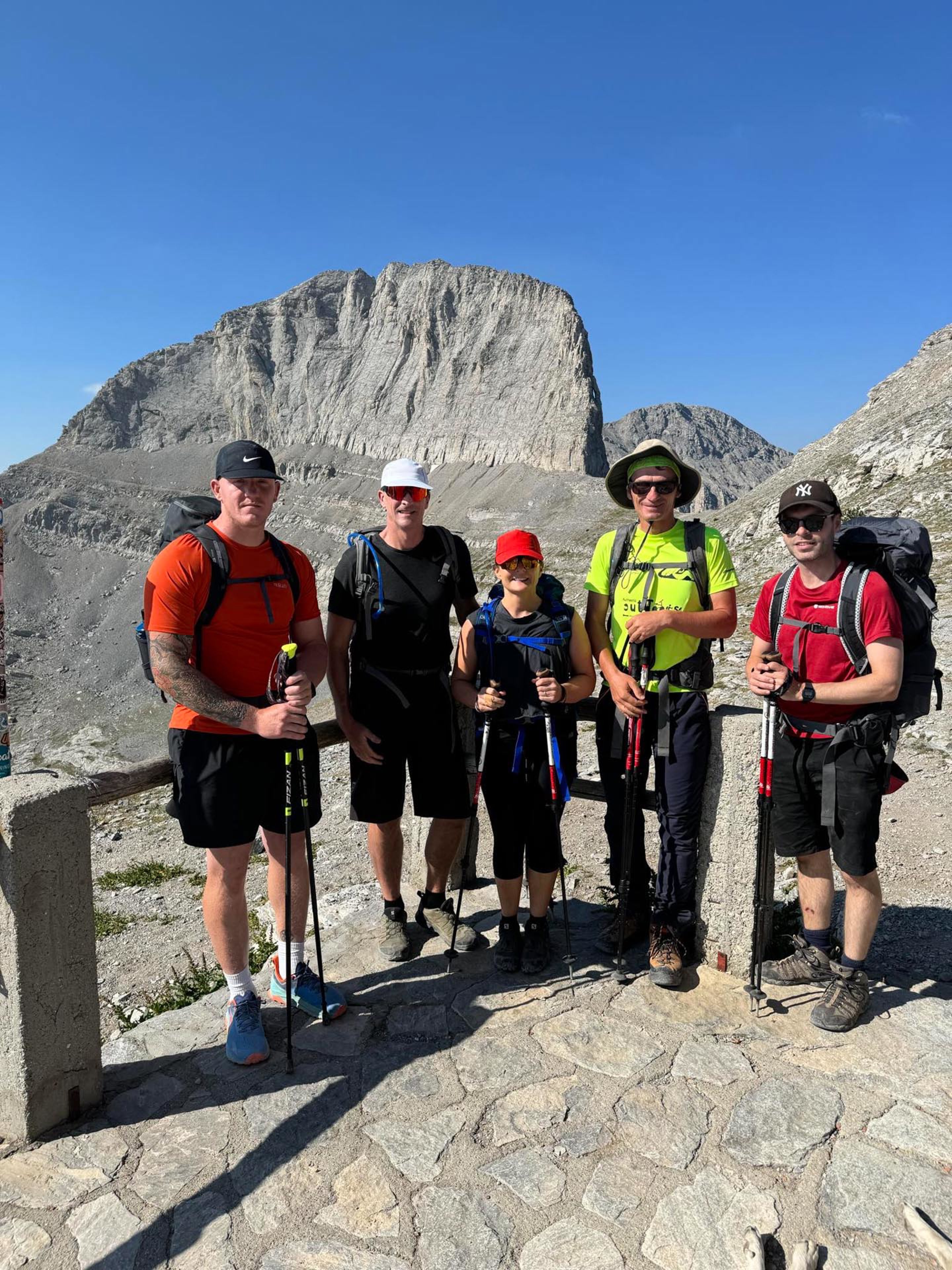
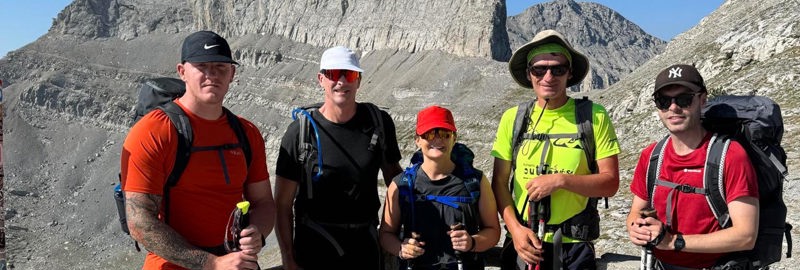
Arrival in Litochoro's main square (Trekking Hellas Base) to meet the guide and the rest of the hiking group. Transfer to Prionia, from where we begin our hike, at an altitude of 1,100 meters. The route from Prionia to Spilios Agapitos mountain hut is the most widely used hiking trail on Mount Olympus and part of the E4 European path. Prionia is the highest point accessible by car. The biggest part of this hike goes through thick forests of pine, beech, and fir trees and is in great condition. We make our way up to an altitude of 2,100 meters and reach the mountain hut Spilios Agapitos.

Estimated hiking Time: 3 – 4 hours

Difficulty level: 3
Peak ascent & hike to mountain hut Ch. Kakalos or Giosos Apostolidis (alt. 2,700 meters)

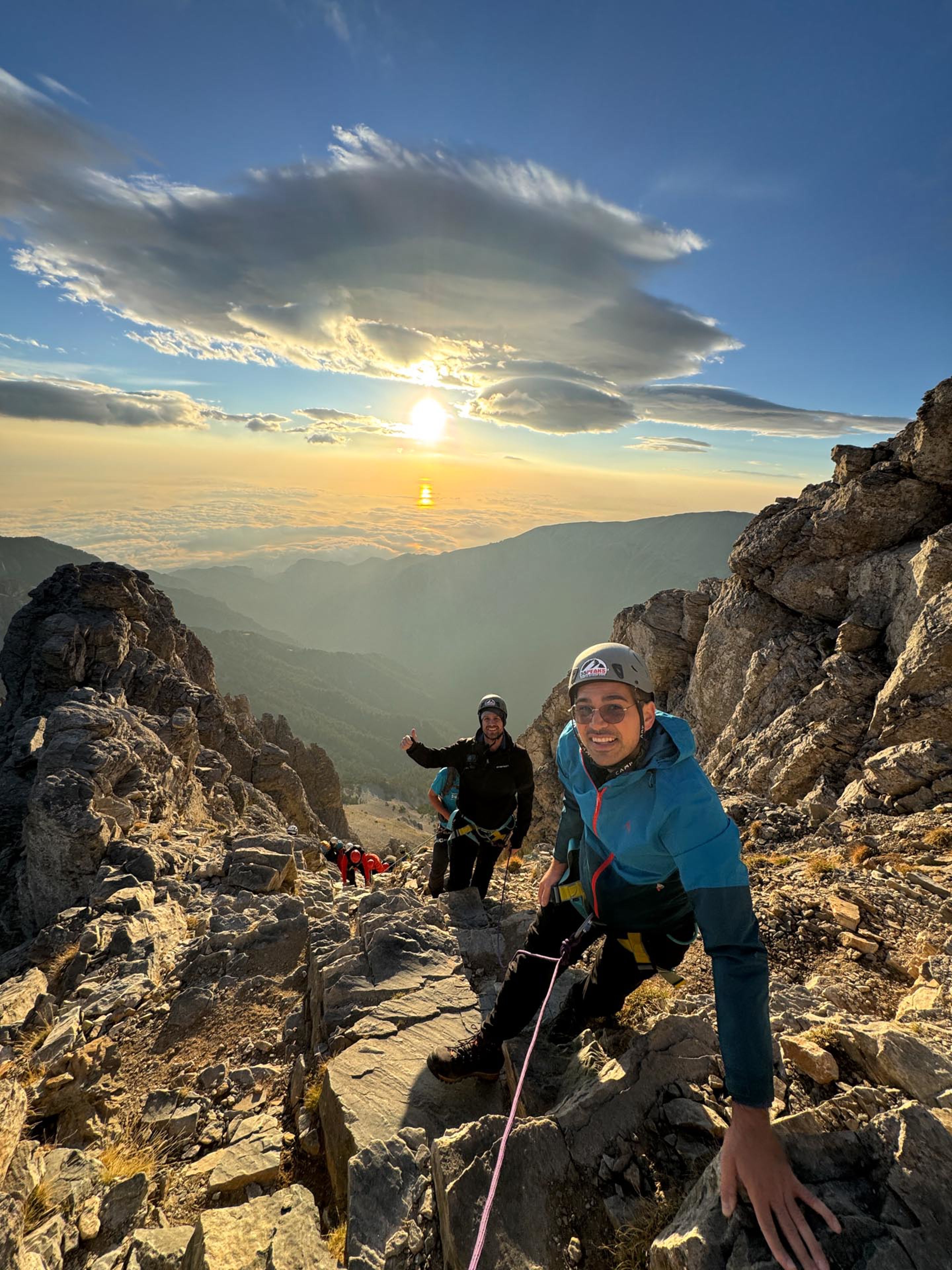
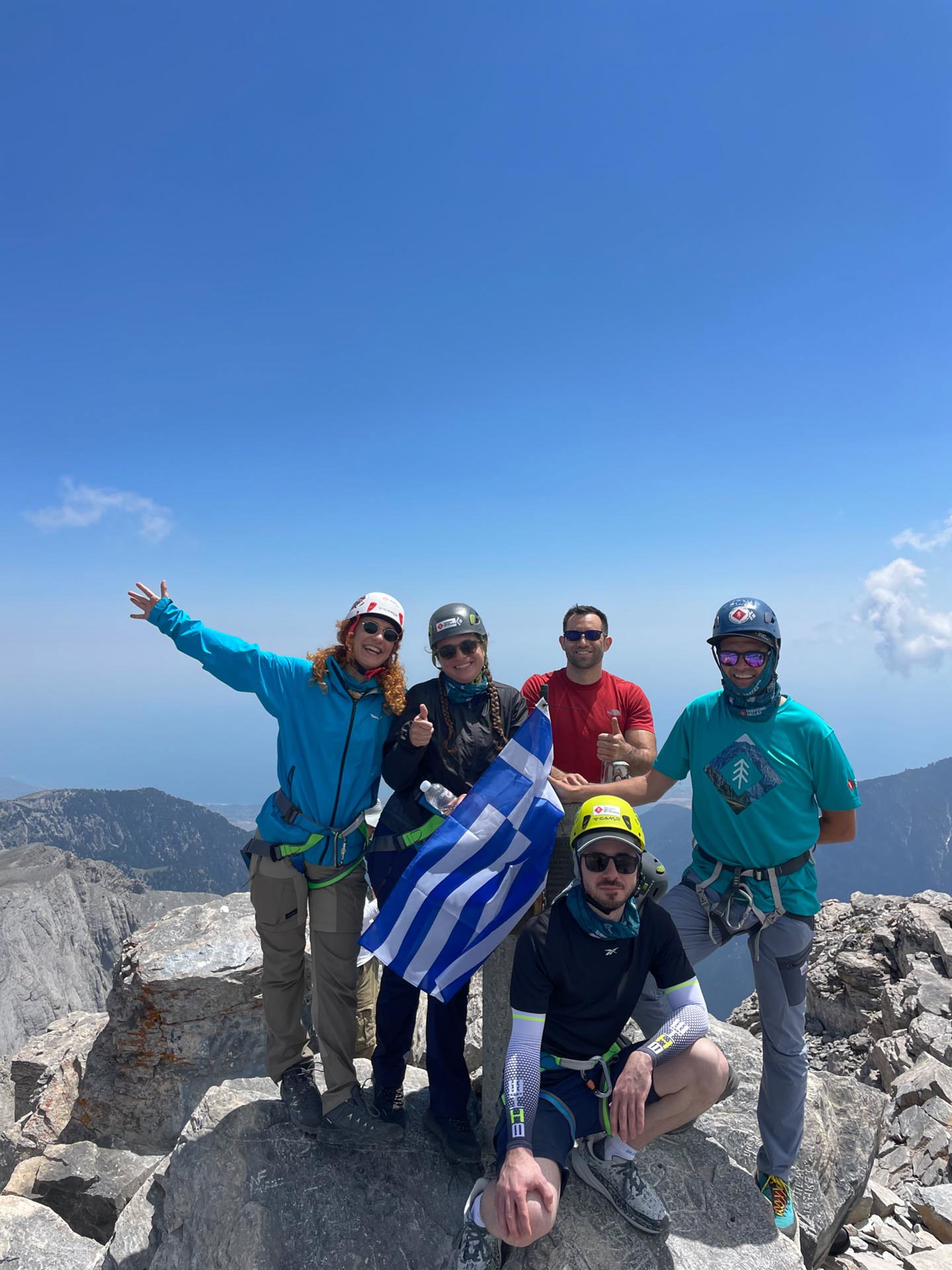
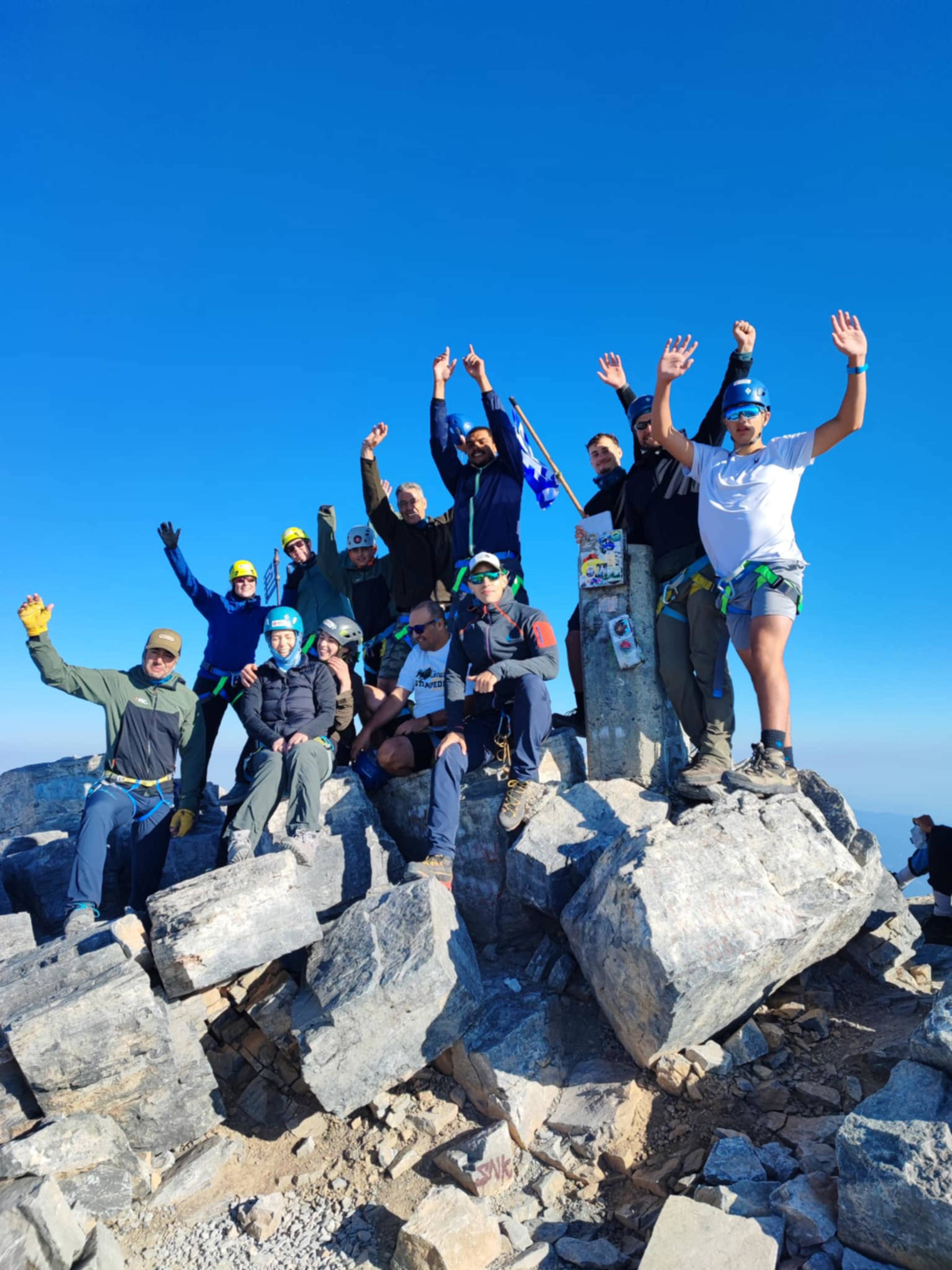
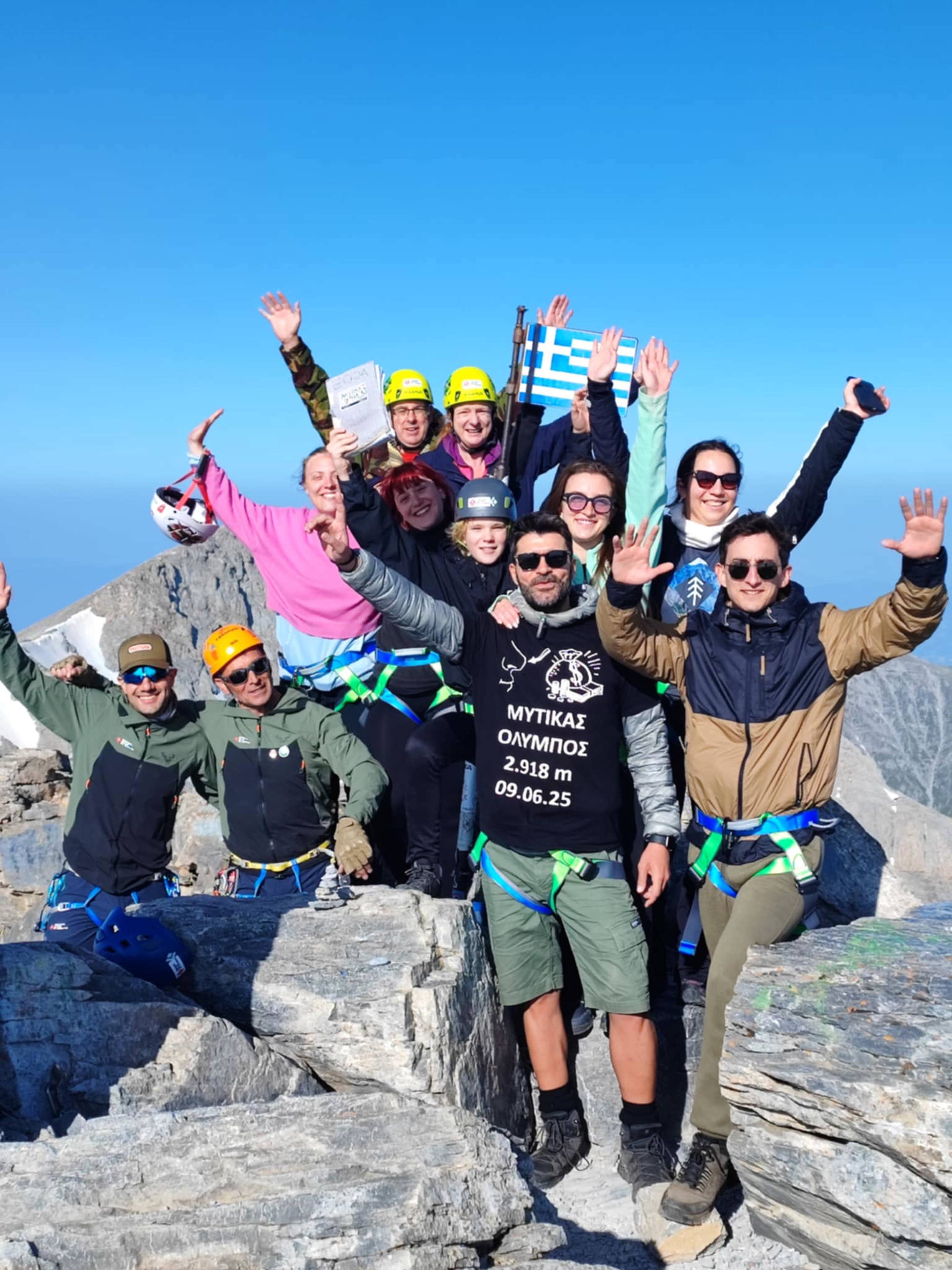
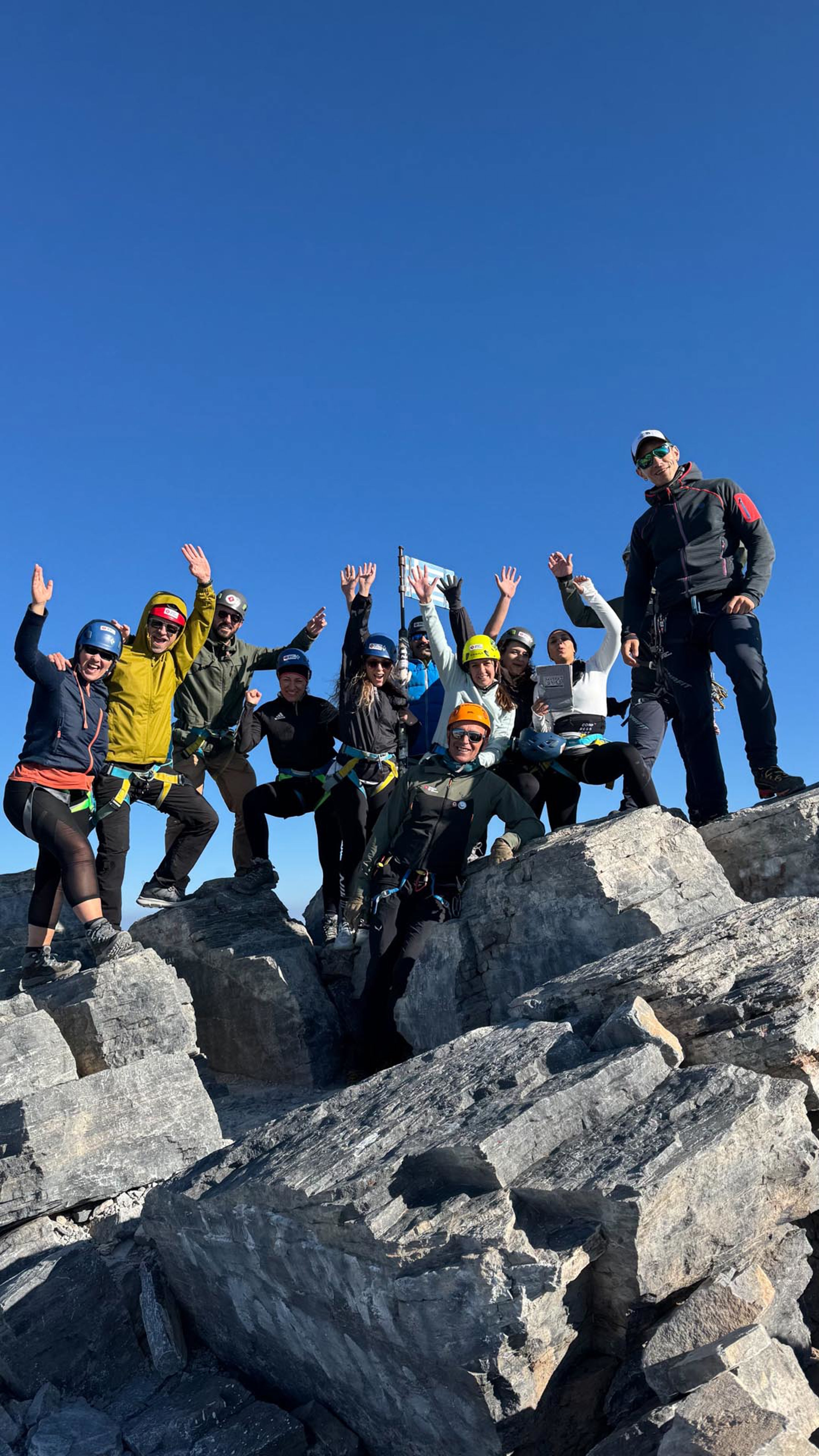
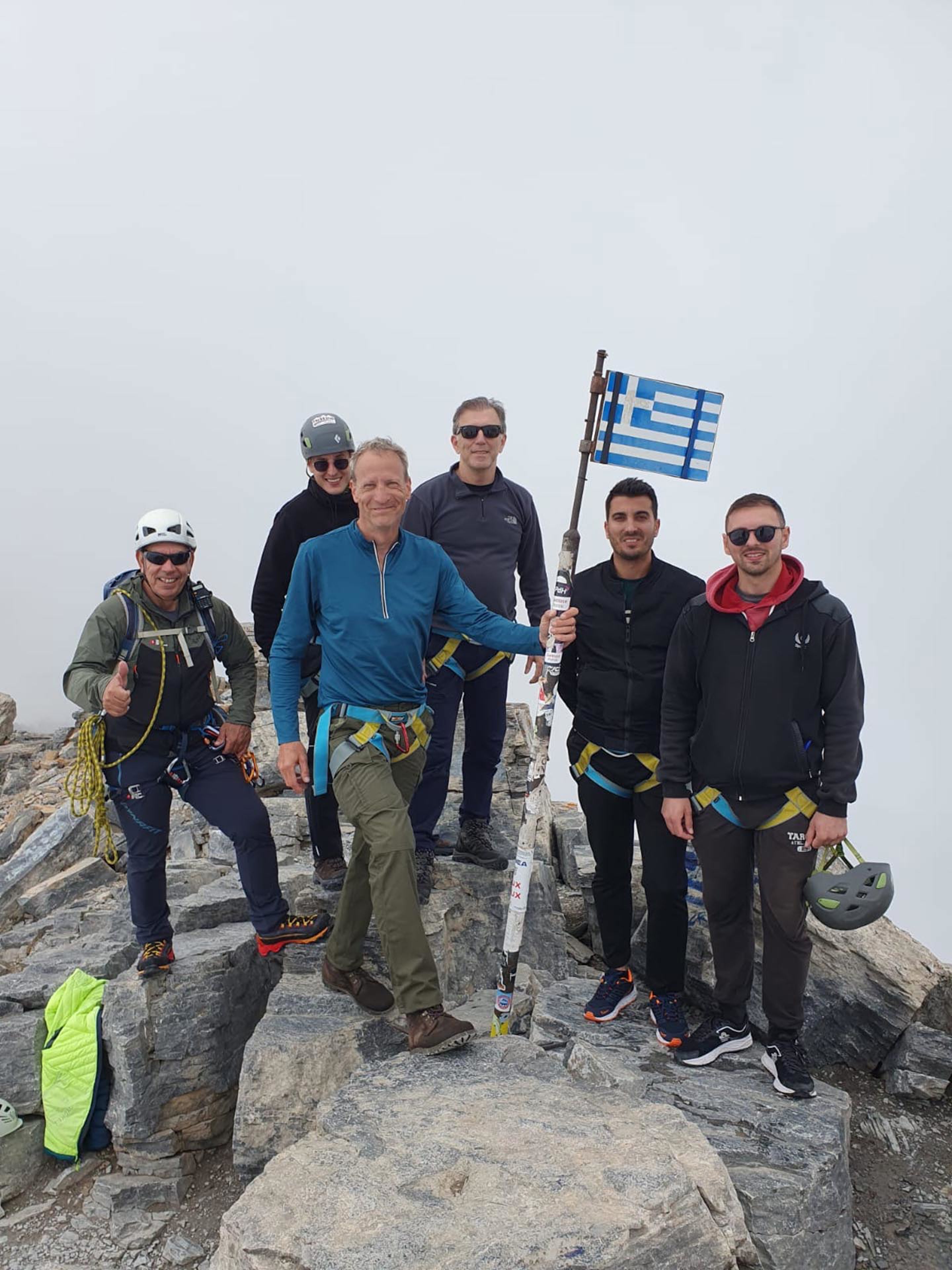
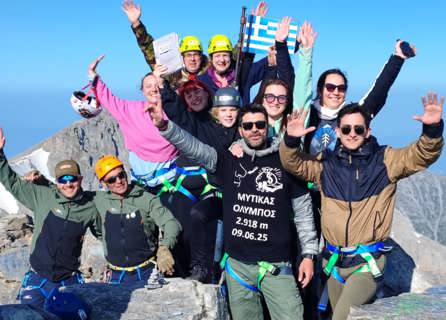
Setting off from the mountain hut, a meandering trail brings us just below the mountains’ main summits. From here we have 2 options, depending on the fitness level of our participants and local weather conditions at the time. Our first option is to climb to Skala at an altitude of 2,882 meters, cross a narrow ridge, and then climb to the summit of Skolio at an altitude of 2,911 meters (4-5 hours hiking and/or scrambling on narrow paths with an altitude gain of 800 meters). Our second option, provided weather allows and snow conditions are right, is to ascend the highest summit, Mytikas, at an altitude of 2,917 meters, following a narrow gorge (this part requires around 1 km of scrambling).

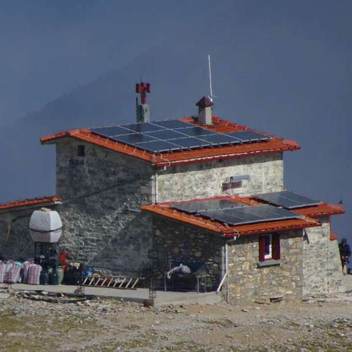
After summiting, we head back, descending by following the same route. Along the way, we cross the spectacular precipice under the summit of Stefani called the Throne of Zeus and reach the Plateau of the Muses. We spend the night in one of the two mountain huts (2-3 hours hiking).

Estimated hiking Time: 6 – 7 hours

Difficulty level: 4

Plateau of Muses – Petrostroouga Mountain Hut (alt. 1,940 m) – Gortsia

Leaving the summit behind us, today is an easy-going day. Before starting our descent, we climb a small peak, named Profitis Ilias, just above our mountain hut. Profitis Ilias offers breathtaking views of Mount Olympus’ summits. Heading back, this time we take a different trail that leads us to the mountain hut of the Hellenic Rescue Team in Petrostrouga at an altitude of 1,940 meters. After our 2-hour hike to Petrostrouga, we take a break and enjoy lunch. Our hiking destination for the day is Gortsia, another 2-3 hours away. From Gortsia we get a transfer back to Litochoro.

Estimated hiking time: 5 – 6 hours

Difficulty level: 3
Important Info

In a glance

CURRENCY
euro (€)
TIMEZONE
UTC+02:00 (EET)

Price

Private tours:

  • 380€/person for 4+ participants
  • 450€/person for 3 participants
  • 550€/person for 2 participants
  • 1000€/person for 1 participant

For more participants please contact us.

General Information

Mount Olympus is the highest mountain in Greece, located in northern Greece comprising a natural boundary between the prefectures of Macedonia and Thessaly. Mount Olympus’ highest point is the summit of Mytikas at 2918m. Since ancient times, Mount Olympus has proved a difficult crossing point for numerous aspiring conquerors of the Greek territory. It is a place of divine beauty, notable in Greek mythology as home of the Greek Gods. Its proximity to the coastline overlooking the Aegean Sea offers breathtaking views and a characteristic silvery mist that creates a unique atmosphere. 1938 it was declared Greece’s first National Park due to its exceptional biodiversity and rich flora. A monumental natural landscape with thickly forested slopes and steep rocky and cloud-covered peaks, hosting more than 1.500 plant species, some of them rare and endemic, as well as wolves, jackals, deer, and some endangered bird and butterfly species. The mountain is uninhabited, however there are 4 organized mountain huts offering shelter and food to its visitors, that stream from all over the world to admire its beauties. It has an extensive network of trails, its total length exceeding 160klm.

In case you are seeking a more demanding and faster tour check our 2 Days Olympus Hike Tour or even our 1 day Olympus Ascend.

Notes

  • For your stay at Agapitos Refuge, there is no need to carry a heavy or bulky sleeping bag. A sleeping liner is more than enough, as it is lightweight and takes up very little space. If you don’t have one, you can easily get it from our offices at an additional cost of €15 for the entire two-day trip. Please note that blankets are provided free of charge at the refuge

  • Starting and finishing point of the tour is the village of Litochoro in the foothills of Mount Olympus.
  • Coming from abroad, the closest airport is in Thessaloniki, Greece’s second largest city, from where Litochoro is not more than a 1,5 hours’ drive (91,5klm/56miles). Coming from Athens, it is an approximate 5-6 hours’ drive (415klm/257miles) and thus it would be best to arrive a day in advance and spend the night in Litochoro. In case you need assistance with hotel bookings, or any other services required we would be pleased to be of assistance.
  • From Mid May to Mid June in case of heavy snowfall in the paths we offer an alternative route from Petrostrouga to Spilios Agapitos to the peaks and  back to Prionia.

Equipment

*For your stay at Agapitos Refuge, there is no need to carry a heavy or bulky sleeping bag. A sleeping liner is more than enough, as it is lightweight and takes up very little space. If you don’t have one, you can easily get it from our offices at an additional cost of €10 for the entire two-day trip. Please note that blankets are provided free of charge at the refuge.

3 Days Hike Olympus

Enjoy the mythical mountain!

Price from €380

DECLARE INTEREST

FAQs

What should I bring with me?

  • What is listed above in Equipment section

What's the meeting point & time?

Meeting Point: Trekking Hellas Mt.Olympus office, to see exact meeting point click here

Time: 09.00 am

When is the tour available?

15 June – October

When is the best time to hike on Mount Olympus?

The climbing season runs between mid-June and late October. Sometimes, the climbing season can start even in mid-May, but this depends on the snow accumulation from winter months. The best time to climb Mount Olympus is beginning of July and beginning of September. Mid-July to late August is also a good period, however it may become too warm and the possibility of afternoon thunderstorms increases.

What is the climate like during the suggested hiking season? (max/min/average temperature)

The weather conditions on Mount Olympus are generally unpredictable and temperatures can vary widely. Several factors influence local weather such as the impact of the sea and the rugged relief of the region. In lower areas, however (Litochoro and the foothills) the climate is typically Mediterranean, i.e. hot and dry in the summer, while humid and cold during the winter. On a higher altitude it is more humid and rougher, with more intense phenomena. The temperature varies in the winter from -10 °C to 10 °C and in the summer from 0 °C to 20 °C, while winds are an almost everyday occurrence. Generally, the temperature falls around 1 °C for every 200m of elevation. As the altitude increases, the phenomena become more intense, and the variations of temperature and humidity are often sudden. The coastal northeast slopes of Olympus receive more rain than the continental northwest, so, as a result, there is a clear difference in vegetation. In some places the winds accumulate snow, 8–10 meters thick, (‘anemosouria’ in Greek), while in some deep ravines snow remains all year round. However, during the climbing season (June to October) these snow patches do not affect hikers. Weather conditions on Mount Olympus may change several times during the day. During the summer, rainfalls are frequent and evening thunderstorms very common, many times accompanied by hail and strong winds.

Which is the estimated hiking time / elevation gain?

Prionia-Spilios Agapitos :

  • Distance: 6.5 km / 4 miles
  • Ascend: from 1,040m to 2,060 m = +1,020 m / from 3,422 ft to 6,742 ft = +3,320 ft

Spilios Agapitos Mountain Hut – Mytikas – Kakalos Mountain Hut:

  • Distance: 6.8 km / 4.2 miles
  • Ascend: from 2,060m to 2,918m = +858 m / 6,742 ft to 9,460 ft = +2,718 ft
  • Descend: from 2,918m to 2,650m = – 268 m / from 9,460ft to 8,700 ft = – 760 ft

Kakalos Mountain Hut – Gortsia:

  • Distance: 10 km / 6.6 miles
  • Descend: from 2,650m to 1,120m = -1,630m / from 8,700ft to 3,675ft = -5,025 ft

Are there many steep sections?

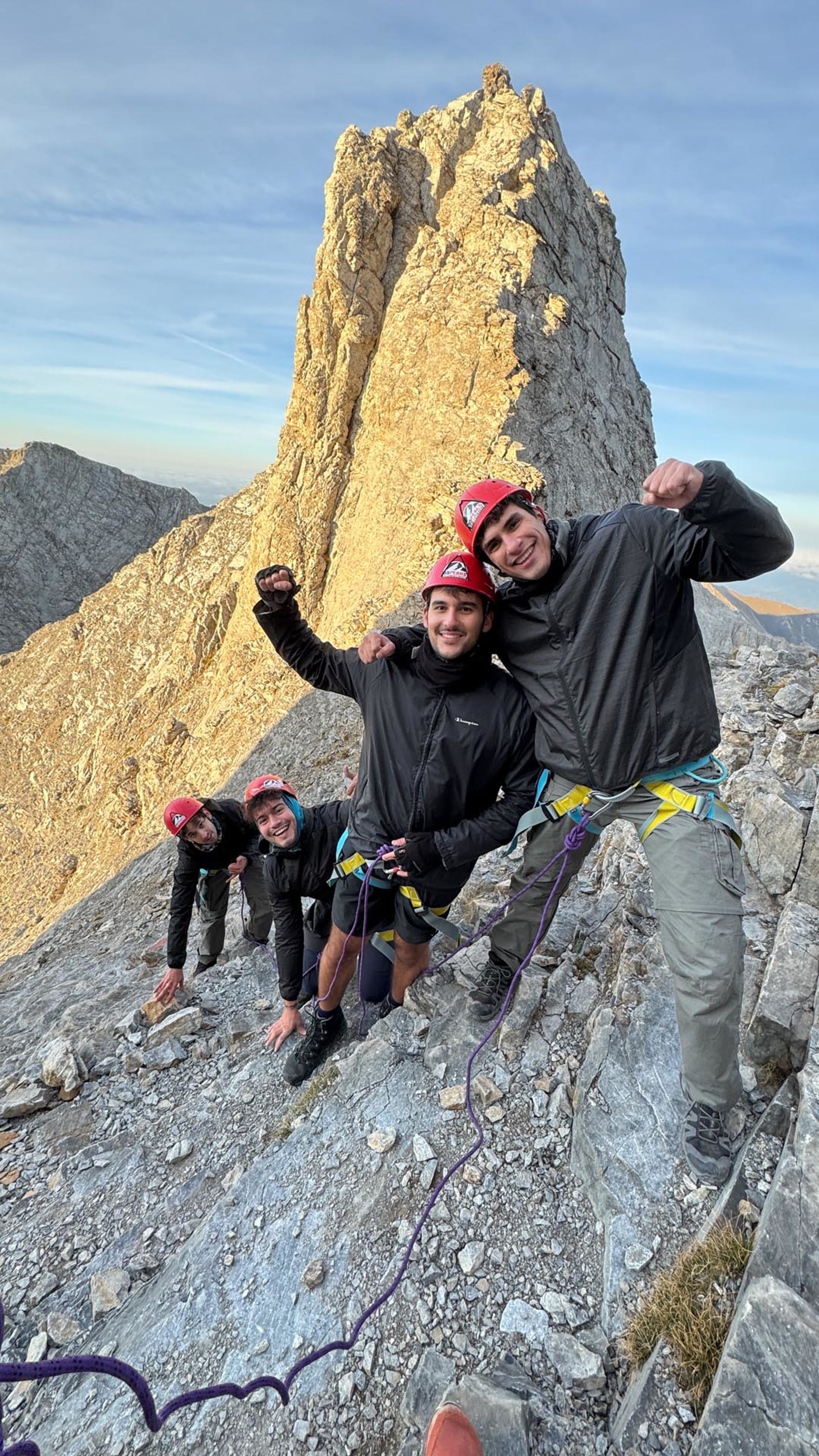
Except for the last 200 m of vertical climb to the summit of Mytikas (2,919 m), which involves a level 3 technical scrambling section (i.e., movement on steep rocky terrain using hands for balance), the rest of the route follows a moderate-difficulty mountaineering/hiking trail.

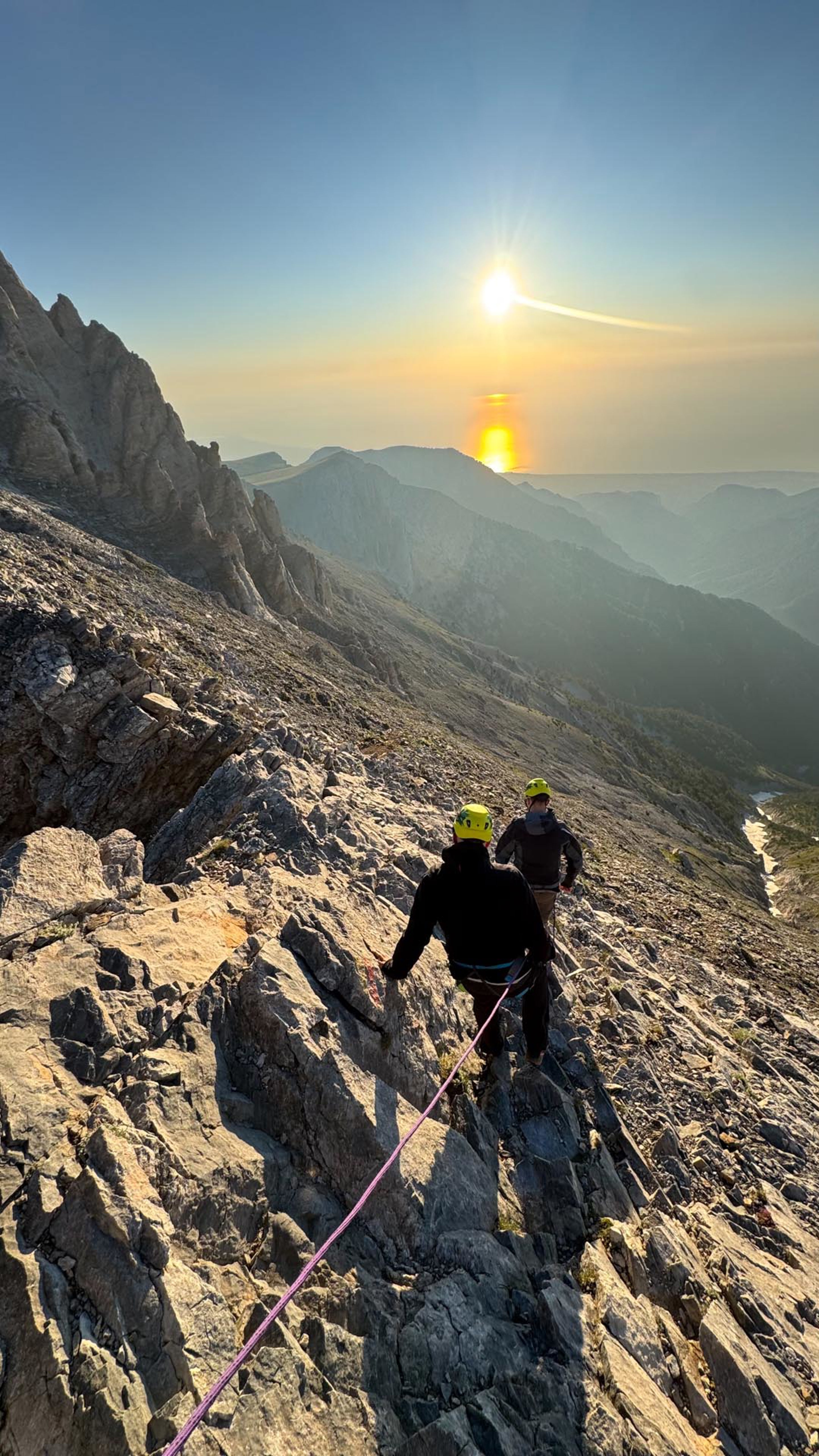
The route to Mytikas is not a climbing route. However, ropes, a helmet, and a harness are essential and are used for safety.

The second-highest peak of Mount Olympus, Skolio (2,911 m), is only 8 meters lower and offers equally stunning views. Access is via a hiking trail of low to moderate difficulty, without steep or exposed sections.

Finally, along the route to the peaks, there are impressive rock formations and fissures next to the otherwise accessible trail. There is no significant risk, as the path is relatively safe.

Is rock climbing or scrambling experience necessary to summit Mount Olympus (Mytikas)?

The route to Mytikas is not a climbing route. It is a scrambling route, meaning movement on steep, occasionally rocky terrain, using your hands for balance.

The use of the necessary safety equipment we provide (helmet, harness, rope) is mandatory for your safety. No prior experience or technical knowledge is required.

Your leader guides your movement in the field, prioritizing your safety above all else.

In case of a group climb, how many people will be on the rope for the ascend of Mytikas?

Each guide can have 3-5 people on the rope (depending on weather conditions and their level of experience). Ascending in “Via-Feratta” style is of course also possible.

If a participant opts not to climb to the summit, is there somewhere safe he/she can wait for the group to descend?

Yes

Will participants need to carry their equipment, or is there a porter service?

Travelers must carry their equipment. There is no porter service available on the mountain. There is a mule caravan used to bring supplies to the mountain huts (Petrostrouga, Kakalos, and G. Apostolidis), which can load luggage for an additional charge. The caravan has a specific timetable of arrival and departure from the mountain huts. It is possible for the mule caravan to adjust its program to our specific timetable, but for a much higher additional charge, as it will have to follow an extra, unplanned route. Certain parts of the mountain routes, like the Zonaria and Kofto routes, connecting the mountain huts Spilios Agapitos and Kakalos, may not be accessible to mules.

Which is the difficulty level of the trek on a scale of 1-5?

The difficulty level of the treks on Mount Olympus is rated with grade 2/3. The last part, the last climb to Mytikas summit is rated with grade 4. The alternative climb to Skolio Summit is rated with grade 2.

Is there mobile phone reception on the mountain?

There is mobile phone reception on about 60% of the route. In some areas, you need to get to a specific location for adequate reception. There is no phone signal inside the Enipeas Canyon, on the Plateau of the Muses nor on parts of the route between Gkortsia and Petrostruga.

Where do we sleep?

There are communal rooms with bank beds in all mountain huts. Setting up camp outside the mountain hut, while using the mountain hut facilities is also possible.

What is a typical menu for breakfast, lunch and dinner?

  • Breakfast: bread, butter, marmalade, honey, cheese, coffee- tea- milk, chocolate spreads
  • Lunch: lunch box incl. sandwiches, fruits, eggs, energy snack, chocolate or lunch in the mountain hut. (See below menus)
  • Dinner in the mountain hut: sample menus: soup, pasta with sauce, salad, bread, cheese / lentils with rice, beef with pasta, rice or mashed potatoes, salad, bread, cheese / soup, sausage with pasta, rice or mashed potatoes, meat plate, salad, bread, cheese.

Is bottled mineral water provided on the tours?

Water is not included in the price. Bottled water is, however, available in the mountain huts, at rates of 1-2€/bottle depending on the bottle size.

Can water bottles be refilled during the hike?

There is a mountain spring in Prionia and another spring (with less water supply) a 45-minute hike past Prionia. There are no other mountain springs close to the hiking routes, so buying a bottle of water is the safest option.

Are mountain huts heated?

Mountain huts are heated, as they are equipped with fireplaces or petrol heaters, but they start operating only when temperature drops to around 10 degrees Celsius. There are no clothes/boots drying facilities. Warm blankets are provided in all mountain huts.

Is a hot shower possible in the mountain huts?

No, there is no possibility of a hot shower in the mountain huts. Mountain huts do have showers, but they are heavily dependent on the available water supply. Water for the showers comes from melted snow and is not heated.

Is there power supply in the mountain huts in order to charge cameras and other electric equipment?

The mountain huts are not connected to the electricity grid. Power is supplied by solar panels and generators and is available only for a few hours per day. Usually, electricity is available from dusk until about 10 or 11pm and occasionally from dawn up to a few hours. Sockets are limited, so it is preferable to have extra power banks, especially if being part of a big group.

How much spending money is needed per day for beverages, snacks etc.?

Beverages in mountain huts cost between 2€ and 5€. There is a big variety of hot beverages (tea, coffee, etc.), soft drinks, and, of course, beer and wine. Different snacks are also available.

What are the recommended tip amounts for guides?

Be the first to know about Trekking Hellas updates! Sign up for our newsletter.

By registering I automatically agree to the Terms of Use.